
Richard Wagamese was an Ojibwe author from the Wabaseemoong Independent Nations in northwestern Ontario. He published Indian Horse in 2012, and it became one of the most celebrated Canadian novels of its generation. Wagamese died in 2017, shortly before the film adaptation reached audiences.
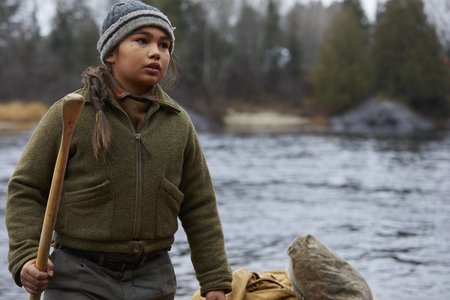
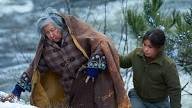
The novel tells the story of Saul Indian Horse, an Ojibwe boy growing up in northern Ontario in the 1950s. The story opens in the bush, in the world of Saul's grandmother Naomi, a world of land, language, ceremony, and kinship. Saul's early education is the land itself. His grandmother is his teacher. And then the government arrives and takes Saul to St. Jerome's Indian Residential School, a Catholic institution run under its assimilationist project. Between 1831 and 1996, more than 150,000 Indigenous children were removed from their families and placed in residential schools across Canada. The Truth and Reconciliation Commission documented the forced severance of children from their parents and the land, the prohibition of Indigenous languages and spiritual practices, and the widespread physical, emotional, and sexual abuse of children. The TRC named this cultural genocide (TRC, 2015).
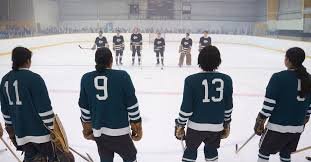
What saves Saul, or appears to save him, is hockey. He discovers the game on the rink the Father Leboutilier builds the school and is extraordinary at it, gifted with an ability to read the ice that comes from the same relational intelligence his grandmother cultivated in him. Hockey becomes his refuge, his identity, his reason to survive. And this is where the novel's deepest wound begins to open, because the same institution that imprisoned him also gave him the ice, and the same priest who nurtures his talent is, as the novel eventually reveals, the person who abused him.
The 2017 film renders one thing the novel can only describe: the contrast between the vast, living land of Saul's early childhood and the enclosed, artificial, white-dominated space of the hockey arena. That visual contrast carries the weight of the entire colonial argument. The land was his first classroom. The arena is his prison, dressed as his salvation.
What the Story Holds: Identity, Silence, and the Long Road Back
The Ice as Freedom and Prison
Before the school there is a boy who knows exactly where he belongs. Saul grows up learning through observation, story, and the direct transmission of knowledge that does not require a classroom to be rigorous. This is what Battiste (2013) means by Indigenous knowledge: a system of understanding that is holistic, relational, place-based, and entirely coherent on its own terms. When Saul arrives at St. Jerome's, he carries this knowledge in his body. The school's first project is to remove it. The hair is cut. The language is forbidden. The name becomes an instrument of compliance. The land disappears. Cognitive imperialism operates not through argument but through daily, methodical erasure, the maintenance of a single language, a single culture, a single frame of reference as the only legitimate way of knowing. What remains is hockey.
The scenes on the frozen lake near St. Jerome's are among the most beautiful in the novel. Saul's ability to read the ice, to see the play forming before anyone else does, comes from the same relational intelligence his grandmother cultivated in him. Hockey, for Saul, is a continuation of the education the school tried to destroy. And this is the novel's first great wound: the thing that keeps Saul alive is also the thing that keeps him inside the institution that is harming him. He is celebrated by white coaches and white teams for as long as he serves their purposes. The moment his Indigeneity becomes visible, when he plays with the warrior spirit of his ancestors, when he refuses to absorb the racial taunts without response, the system turns on him.
Paris (2021) argues that culturally sustaining pedagogy must begin by naming whiteness as the operative problem, the system that requires others to divest from their own identity as the cost of access. Saul's hockey career is a precise illustration of what that cost looks like across a lifetime.