
I have been on thousands of calls. I have carried people out of rooming houses, out of alleyways, out of doorways in January. I have been the person in the uniform who arrives when things fall apart. And for too many years, I arrived carrying something I did not know I was carrying: a set of assumptions about who the person on the stretcher was, what had brought them there, and what they deserved.
I am thinking, in particular, of Indigenous patients. Of the calls that were quietly, collectively filed under a category that nobody wrote down but everyone understood. The ones where I watched police officers roll their eyes. Where hospital staff sighed when the stretcher came through the door. Where I felt, in myself, a hardening, a clinical detachment that I told myself was professionalism, but was, I now understand, something closer to indifference rooted in ignorance.
I did not think of myself as someone with a stake in reconciliation. My parents arrived in Canada from the Philippines in 1973, the year I was born. I was not a descendant of the settlers who signed the treaties, who built the residential schools, who passed the laws that made it illegal for Indigenous children to speak their own languages. My ancestors were themselves colonized. The Spanish had arrived in the Philippines centuries earlier and made their own violent claim on Indigenous place.
That view changed. Not all at once, and not without resistance, but it changed through nearly twenty years of work as an Ontario paramedic, through my college's commitment to Truth and Reconciliation and to Indigenous Ways of Knowing and Being, and most significantly through the graduate studies that forced me to examine my own position within the settler space I inhabit. Mezirow (1997) describes this kind of shift as transformative learning, a process that begins not with new information but with a disorienting dilemma that forces critical reflection on assumptions so deeply held they had previously been invisible. I am a settler. The fact that my family arrived recently, or that my own ancestors suffered under colonialism elsewhere, does not exempt me from the structures I now benefit from and perpetuate. Learning to see that has been among the most disorienting and necessary education of my adult life.
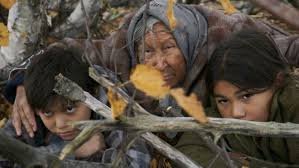
It was in this spirit that I came to Richard Wagamese's Indian Horse, first the novel, and then the 2017 film adaptation directed by Stephen S. Campanelli. I chose it because I needed to be broken open a little more. I chose it because I wanted to understand something about the people I had cared for, or failed to care for properly, over two decades of practice. And I chose it because I am now three years into teaching paramedic students at an Ontario College, and I want my students to be better than I was.
The book delivered. It was rich with pain, with symbolism, with the simultaneous destruction and stubborn persistence of a self. Near the end, in a revelation the novel withholds for exactly as long as Saul himself withholds it, something crushed me. I sat with it, turned it over, and went back through the entire story with new eyes. Every moment of rage or flight or self-destruction reorganized itself around a wound that had never been named. I understood, in a way I had not fully understood before, what I had been looking at all those years on the streets of Ontario, and why I had so consistently failed to see it.